


The Mini Gastric Bypass (MGB) is a specialized bariatric procedure that acts as a simpler alternative to the traditional Roux-en-Y bypass. It creates a long narrow tube of the stomach (similar to a sleeve) and connects it to a loop of the small intestine, bypassing a portion of the digestive tract to promote weight loss.
The first use of the gastric bypass, in 1967, used a “loop” of small bowel for reconstruction, rather than the “Y-construction” prevalent today. Although simpler to create, early versions of this approach allowed bile and pancreatic enzymes to enter the esophagus, sometimes causing inflammation.
However, the modern Mini Gastric Bypass has refined this technique. Bariatric surgeons recognized that while the old loop reconstruction (Billroth II) caused issues when placed high near the esophagus, the modern MGB technique places the connection lower and uses a longer loop, significantly reducing these risks while maintaining excellent weight loss results.
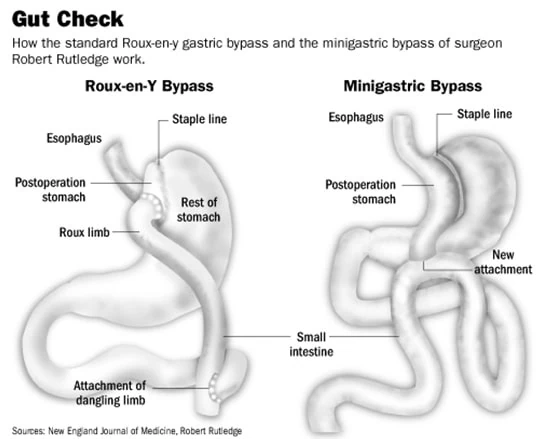
The Mini-Gastric Bypass has become a popular alternative to the Roux-en-Y procedure. The key difference lies in the simplicity of its construction:
Unlike the standard bypass which requires two connections, the MGB requires only one surgical connection (anastomosis) between the stomach and intestine. This reduces the complexity of the surgery and often results in shorter operating times.
Learn more from NIDDK about healthy lifestyle and nutrition.
Also read: Complete Guide To Bariatric Surgery.
1-800-215-6497
1-800-215-6497